The face of the rebuilt town
Yellow brick, gables, arches and chimneys: how Nieuwpoort put itself back together.
The brick is the first thing you notice: not red, but a soft sand-yellow that turns almost gold in the low coastal light. It is made from the calcareous polder clay dredged from these flatlands; fire it, and the lime bleaches the clay pale.
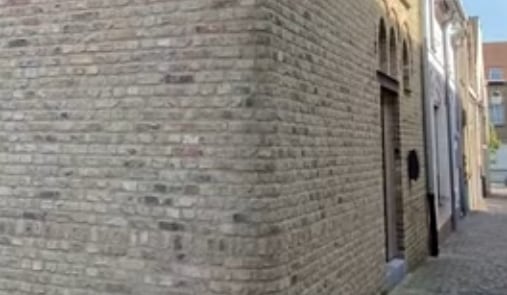
Rebuilt Nieuwpoort used it everywhere, giving the town a calm, unified face: wrought-iron balconies, stepped and spouted gables, and shutters in muted greens and oxblood. No. 23a keeps its butcher's roller shutter, weathered to the colour of the street.
Look up and the vocabulary repeats: segmental brick arches over doors and windows, dormers with curved or crow-stepped gables, and tall profiled chimneys. It is a deliberately old-fashioned language, a regional Flemish-Renaissance revival, chosen in the 1920s to rebuild the town as it had been, not as something new.