History
The street that was rebuilt
On the Anchor Street, the IJzer, and a town that chose water over surrender.
The house archive6 min read
On the Anchor Street, the IJzer, and a town that chose water over surrender.
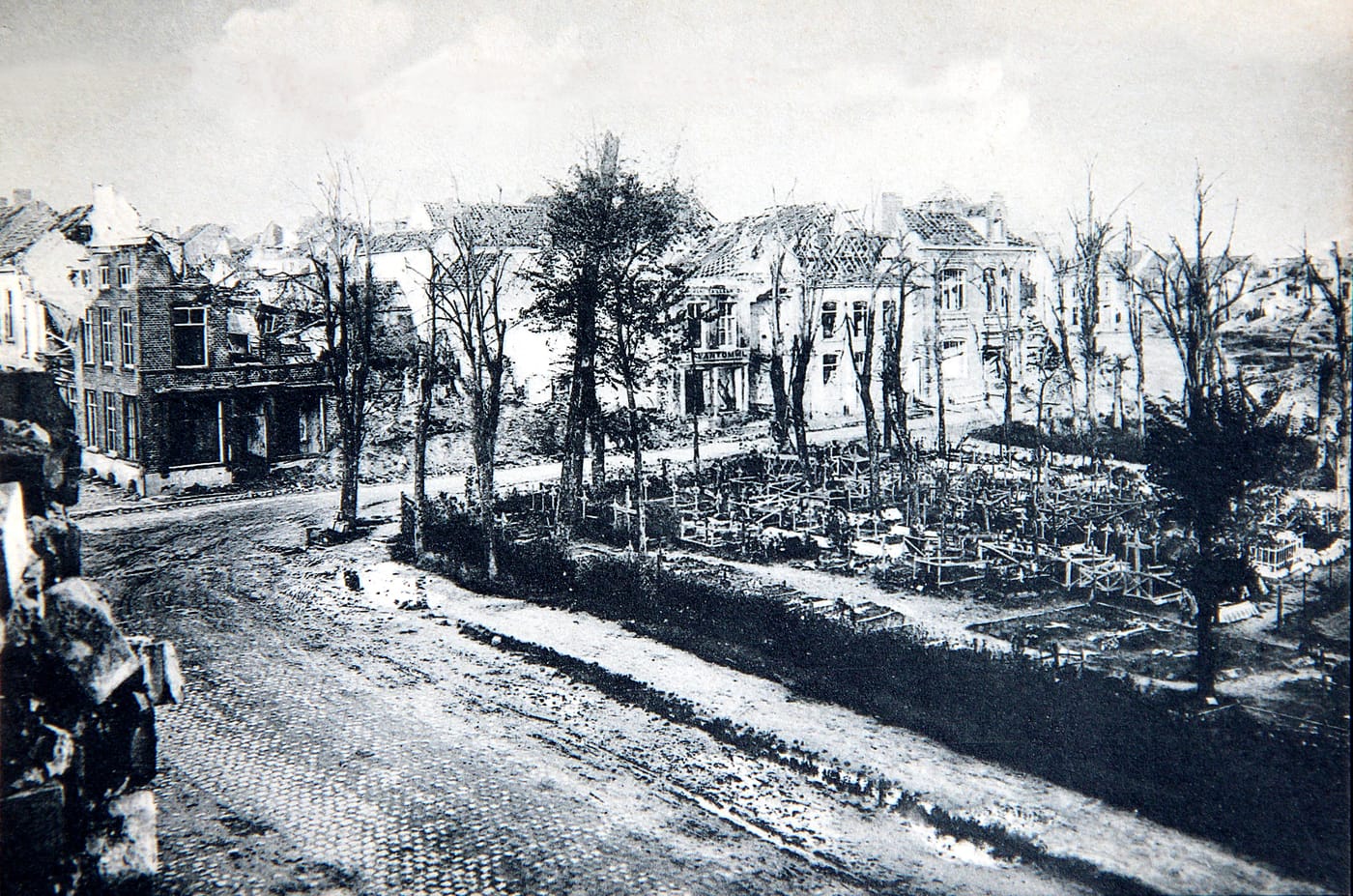
AAnkerstraat runs a short block back from the quays of Nieuwpoort, where the IJzer meets the North Sea. The name (Anchor Street) sounds nautical, but local historians tell a stranger story: it is a French-era misreading of the dialect Angwerstraat, from handwerk (handicraft), for the lace-makers and artisans who once worked the alley.
In October 1914 the war reached the coast. To stop the German advance, Belgian engineers opened the old sluices at high tide and let the sea into the low Yser plain. The flood held the line for four years, but the town behind it was shelled to rubble.
“They gave the plain back to the sea, and the sea gave back the front.”
When the guns fell silent, Nieuwpoort was almost nothing. Through the 1920s it was rebuilt street by street in a deliberately traditional style, its houses faced in the warm yellow brick of the region.
No. 23a rose in 1923. Behind its later roller shutter it is said to have served, for a time, as an emergency butcher: one small doorway onto a century that ran straight through this street.